How to Play Piano With Both Hands: A Step-by-Step Hand Independence Plan for Beginners
Why your hands refuse to cooperate, the seven-stage order that makes two-hand playing click, daily independence exercises, and a realistic timeline from one hand to both.
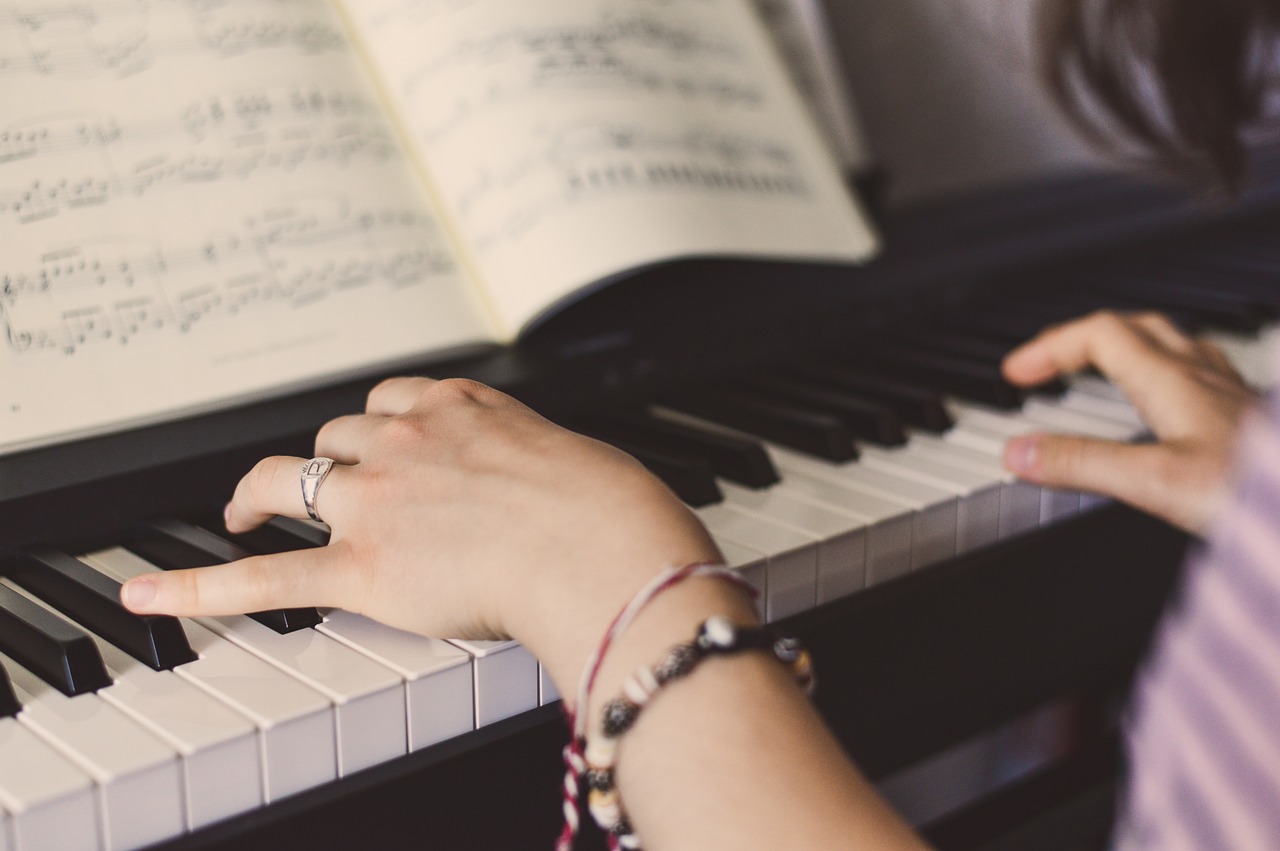
Quick answer
Learn each hand separately until it plays without thinking, then combine them slowly in a fixed order: mirror patterns first, then both hands moving the same way, then the left hand holding long notes under a moving right hand, then left-hand chords and patterns under a melody. Practise one or two bars at a time at about half speed with a metronome, mark the beats where both hands play together, and only speed up after three clean repetitions in a row. With 15 to 20 minutes a day, most beginners play simple two-hand pieces within 4 to 8 weeks, while true independence, with different rhythms in each hand, builds over 4 to 6 months.
Why playing with both hands feels impossible at first
Each of your hands can already play a simple pattern on its own. What breaks down is attention: when both hands need conscious control at the same moment, your brain can only steer one of them properly, so the other freezes, stumbles, or starts copying its partner.
The fix is not more effort, it is sequencing. Once one hand's part is automatic, your attention is free for the other hand, and the two parts start to lock together. Every technique in this guide is a way of making one hand automatic before asking it to share attention.
- Your left hand copies the rhythm of your right hand instead of playing its own part
- You stop at every bar line to check where your hands should go next
- One hand freezes the moment the other hand starts moving
- You can play each hand perfectly alone but fall apart within two beats of playing together
- You look down at the keys constantly and lose your place in the music
The seven-stage order that makes two-hand playing click
Most frustration comes from jumping straight to stage five or six. Work through these stages in order. Each one adds a single new coordination demand, so you are never learning two hard things at once.
In C position, the right thumb sits on middle C and the left little finger sits on the C an octave below. Notice that the hands use opposite finger numbers to play the same notes, which is exactly why parallel motion feels harder than you expect.
| Stage | What the hands do | Starter exercise | Move on when |
|---|---|---|---|
| 1. Hands separate | Each hand plays alone | C-D-E-F-G up and down, right hand then left hand | Each hand plays it 3 times cleanly without looking |
| 2. Mirror motion | Hands move outward from the thumbs using the same finger numbers | Right thumb on middle C, left thumb on the C below; play outward and back: right C-D-E-F-G, left C-B-A-G-F | Clean at 60 bpm, one note per beat |
| 3. Parallel motion | Both hands move in the same direction, an octave apart | C major five-finger pattern hands together, right fingers 1-5, left fingers 5-1 | Clean at 60 bpm with even volume in both hands |
| 4. Held note under melody | Left hand holds a long note while the right hand moves | Left hand holds C for four beats under right-hand C-D-E-F | The held note does not cut off when the right hand moves |
| 5. Block chords under melody | Left hand changes a simple chord each bar | Ode to Joy melody with left-hand C and G chords | Chord changes land exactly on beat one |
| 6. Broken-chord patterns | Left hand repeats a pattern while the right hand plays a tune | Left hand C-G-E-G under a simple melody | The pattern keeps going even when the melody pauses |
| 7. Different rhythms | Each hand plays its own rhythm | Left hand one note per beat, right hand two notes per beat | Both rhythms stay steady with the metronome |
How to practise any two-hand passage: the chunking method
When a new piece puts both hands together, do not play it from the top and hope. Break it into small chunks and rebuild it with a repeatable routine. This turns a confusing page into a series of small, solvable problems.
The key idea is the together points: the beats where both hands strike a note at the same moment. If those points line up, everything between them tends to fall into place.
- Choose one or two bars only, never the whole page
- Play the right hand alone three times, then the left hand alone three times, counting aloud
- Circle the together points in pencil, the beats where both hands play at once
- Play hands together at about half your target speed with a metronome, aiming at the together points
- Only raise the tempo by 4 to 8 bpm after three clean repetitions in a row
- Link chunks with overlap: bars 1-2, then 2-3, then 1-3, so the joins are practised too
- After a mistake, fix that exact spot slowly rather than restarting from bar 1
Five daily hand independence exercises (10 minutes total)
These exercises build coordination directly rather than through pieces. Do them at the start of each practice session for two minutes each. The first one needs no piano at all, so it works on a table, in the car, or during a break.
| Exercise | How to do it | Why it works |
|---|---|---|
| Tap and count | Tap the left hand once per beat on your lap and the right hand twice per beat, counting aloud; then swap hands | Separates rhythm from note-finding, the root skill behind independence |
| Mirror five-finger pattern | Thumbs on middle C and the C below, play outward and back together, then repeat with both thumbs on G | Same finger numbers in both hands makes the first coordination step easy |
| Parallel five-finger pattern | Both hands play C-D-E-F-G in the same direction an octave apart, then in G position | Trains the brain to accept opposite finger numbers in each hand |
| Hold and move | Left hand holds a C chord for four beats while the right hand plays a five-finger pattern; swap roles | Teaches one hand to stay still while the other moves |
| Loud and soft | Right hand plays the melody loudly while the left hand plays the same notes softly; then reverse | Builds the volume control needed to make a melody sing over its accompaniment |
Common mistakes that slow down two-hand playing
Almost every stalled beginner is making one or more of these mistakes. Each one is easy to fix once you can see it.
- Putting hands together before each hand is secure on its own
- Practising at the final tempo instead of half speed, which rehearses mistakes
- Always starting from bar 1, so the beginning is polished and the ending is never learned
- Watching your hands the whole time instead of learning where the keys are by feel
- Giving the left hand less practice even though, for most right-handed learners, it is the weaker hand
- Lifting the shoulders or locking the wrists when concentrating, which makes both hands stiff
- Counting silently, which lets the rhythm drift without you noticing
How long does it take to play piano with both hands?
These are typical ranges for a beginner practising 15 to 20 minutes a day, five days a week, with weekly feedback from a teacher. Self-taught learners often take longer, mainly because rhythm and fingering errors go unnoticed and have to be unlearned later.
| Milestone | Typical time | What it looks like |
|---|---|---|
| Mirror and parallel five-finger patterns | 1-2 weeks | Both hands move together cleanly at a slow, steady tempo |
| Melody over held left-hand notes | 2-4 weeks | Left hand sustains while the right hand plays a simple tune |
| Melody with left-hand chord changes | 4-8 weeks | Easy pieces like Ode to Joy with two or three chords |
| Left-hand patterns under a melody | 2-4 months | Broken chords keep flowing while the right hand plays |
| Different rhythms in each hand | 4-6 months | Each hand keeps its own rhythm without copying the other |
| Sight-reading easy two-hand pieces | 6-12 months | Playing new beginner pieces hands together on the first few attempts |
A four-week plan from one hand to two
If you can already play simple tunes with one hand, this plan gets both hands working together within a month. Keep each session to 15 or 20 minutes, and do the independence exercises first.
- Week 1: tap-and-count daily, mirror and parallel five-finger patterns in C, each hand of Ode to Joy separately
- Week 2: add the hold-and-move exercise, play Ode to Joy with left-hand held notes on beat one of each bar
- Week 3: switch the left hand to C and G block chords under Ode to Joy, chunk two bars at a time at 60 bpm
- Week 4: try a simple broken-chord left hand, play the full piece hands together, and record yourself once at the end of the week
Frequently Asked Questions
Should I learn piano hands separately or hands together?
Start hands separately until each part is secure, then put them together slowly. Going hands together too early makes you rehearse mistakes, but staying hands separate for weeks delays coordination. A good rule is to combine them as soon as each hand can play its part three times cleanly.
Why does my left hand copy my right hand?
Because both hands are competing for your attention, and the brain defaults to moving them in the same rhythm. Practise the right hand until it is automatic, then use the tap-and-count exercise to train each hand to keep its own rhythm.
How do I play two different rhythms at the same time on piano?
Start away from the keyboard by tapping one beat in the left hand and two in the right while counting aloud. Then move to the keys at a slow tempo with a metronome, focusing on the beats where both hands land together.
How long should I practise each hand before putting them together?
Usually a few days to a week for a beginner piece. Once each hand can play its part three times in a row without errors or looking down, it is ready to combine.
Is it normal for my left hand to be much weaker?
Yes. For most right-handed learners the left hand is less coordinated at first. Give it extra repetitions, start the independence exercises with the left hand, and the gap usually narrows within a few months.
Can adults learn piano hand independence?
Yes. Adults often progress faster than children at first because they practise deliberately and understand why each exercise matters. The same stages apply at any age; adults just tend to need more patience with slow practice.
What is a good first song to play with both hands?
Ode to Joy is a classic choice because the right hand stays in a five-finger position and the left hand only needs two simple chords. Mary Had a Little Lamb and Twinkle Twinkle Little Star with held left-hand notes also work well.
Do I need to read music to play with both hands?
No, but it helps. You can learn two-hand coordination by ear or from chord charts. Reading music makes it much easier to see where the hands line up and to learn new pieces faster.
Stuck at hands together?
Book a free trial piano class and have a teacher watch both hands live, find exactly where coordination breaks down, and set you a week-by-week independence plan.
Related Articles
Online Piano Lessons FAQs: Cost, Practice Time, and Results
A practical FAQ guide for students and parents comparing online piano lessons by outcomes, routine, and teacher quality.
Read articleOnline Guitar Lessons FAQs: Beginner Roadmap, Cost, and Setup
Top questions from beginner guitar students covering class format, progress speed, and how to avoid common early mistakes.
Read articleHow to Learn Guitar: Complete Beginner Guide for First 90 Days
A complete step-by-step roadmap for learning guitar from scratch, including routine, song strategy, and mistake fixes.
Read article